



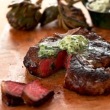
















This is not a recipe of parma or proscutto ham, but of cured ham the way it
was/is done in Norway. Somebody who lives in Italy part of the year told that
those hams resemble each other very much.
It's a time consuming process !
Usually pigs were slaughtered in november/december. You take one of the hams -
or both - cut it clean and pear shaped, so that there is nothing hanging loose.
Rub each ham with 2-3 tbls salt, 2 tbls sugar and 1 tsp something called
salpeter. (It's really not necessary, I TINK it is a Sodium nitrate) Next day
you beat the hams carefully wit a mallet, or massage it roughly. (I think that
is to get more of the blood from the bone)
Then you find a big vessel - not metal - and put a handful of corse salt in the
bottom. Make a thick mixture by mixing 3 lb salt,2 lb sugar and 1/4 lb milled
black pepper and a glass of water in a skillet and heat it until it smells
nicely and is thick and semi-liquid like a porridge. Cover the ham(s) with this
mixture, be sure to put most on the cut surfaces. After 3 days, pur 1cup of
golden corn syrup over the cut surfaces.
Turn the hams dayly for 6 weeks. and pour over them the liquid that forms (also
daily). They should be massaged once in a while,too.
They should then hang to dry for a couple of days, then some people like to
smoke them slightly in cold smoke - sorry, I don't know how long. Then they are
brushed off and hung do mature/dry, first a week uncovered, then in a thin
muslin bag. The bag should not touch the ham, so some kind of thin wire was
often sewn in the sides of the bag to prevent it from sticking to the meat. Two
reasons: It is much cleaner, but the main reason is to keep the flies away, and
they may get to the meat if the material clings to the bag.
Now comes the time of patience. The hams should hang in dry cool air - not
freezing, but not many degrees either. In Norway they say such a ham is ready
when the coockoo starts to sing - which is in the beginning of May . The hams
should be evenly moist, but cured and firm. They should not be dry or hard, and
not wet at the bone. The trick is the balance between salt, air humidity and
temperature.
No wonder the ham is expencive.
This is the way I remeber from my childhood - except I don't remember us using
pepper. But all my old cook books say you should. I've checked. I think it
makes the meat more aromatic.
The perfect ham was worth waiting for. In thin slices it accompanied flatbread
(a thin unleavened bread) and sour cream,, or with the tiny new potatoes -
hot or cold, or boiled vegetables - tiny new carrots, mangetouts, neeps.
Later in summer it was served with potatoes in a cream sauce, or with scrambled
eggs with lots of chives and home made bread .
Ham this way also is a great snack with a cold beer.
Hope this helped. I enjoyed finding the old recipes, and memories of the work
and the result eaten the next summer. Funny - I can only seem to remeber sunny
summers. Must be the ham - which was concidered the perfect lunch on a sunny
day.
- Post Reply
- Post New
- Save to Recipe Box
ADVERTISEMENT
Random Recipes from:
Main Dishes - Pork, Ham
Main Dishes - Pork, Ham
- Mustard Pork Chops for Mickey, Mo.
- Marinated Pork Tenderloin (serves 50) ... good alternative / addition
- Grilled Asian Pork Chops with Baby Bok Choy
- Roasted Pork Shoulder (Pernil de Cerdo al Horno) - Another recipe for Nancy (Pork Recipe Caribbean style)
- Hungarian Pork Aspic
- Spareribs Aloha (in pineapple sweet and sour sauce) (Hunt's Tomato Sauce)
- Barbecued Ham Steak (Heinz Ketchup recipe, 1990's)
- Roasted Pork Loin with Fennel, Peas and Parmesan
- Homemade Italian Sweet Fennel Sausage (makes about 4 lbs.)
- Slow Cooked Sweet and Sour Pork (crock pot)
UPLOAD AN IMAGE
Allowed file types: .gif .png .jpg .jpeg
Allowed file types: .gif .png .jpg .jpeg
POST A REPLY
Post a Request - Answer a Question
Share a Recipe
Thank You To All Who Contribute
Post a Request - Answer a Question
Share a Recipe
Thank You To All Who Contribute
- Do not use the message boards for advertising or solicitation of our visitors.
- Do not post personal data about yourself or others such as resumes, phone numbers, addresses, etc.
- Be kind. Rude or offensive posts are not acceptable. If you should find a posting that is objectionable to you please do not post a response. E-mail a message to: help@recipelink.com If a complaint is made against a message it is removed.
- Choose the board topic that best suits your post. Off topic messages may be moved or removed. Posts of the same request to more than one message board will be deleted.
- Please do not request that responses be e-mailed directly to you - we work together as a group and we all want to enjoy the replies!
- Please keep posting of URLs to a minimum and limited to exact responses to requests. Posts with links included are removed if they are inaccurate, if they don't lead to the exact answer to the request or if the site content doesn't meet our criteria for sites we link to.
- E-mail all site-related questions and comments to:help@recipelink.com
-
 The message
boards are monitored and not all posts are accepted. We reserve the right to
modify, move, use or remove (or not remove) information posted at our discretion
and without prior notification or explanation. Failure to follow the guidelines
may result in loss of access. These guidelines are subject to change without
notice.
The message
boards are monitored and not all posts are accepted. We reserve the right to
modify, move, use or remove (or not remove) information posted at our discretion
and without prior notification or explanation. Failure to follow the guidelines
may result in loss of access. These guidelines are subject to change without
notice.
 Not required, but a request:
Please take a moment to post a thank you to those that take the time (sometimes hours) to find the recipe or information you requested!
Not required, but a request:
Please take a moment to post a thank you to those that take the time (sometimes hours) to find the recipe or information you requested!
Thank you for participating!
POST A NEW MESSAGE
Post a Request - Answer a Question
Share a Recipe
Thank You To All Who Contribute
Post a Request - Answer a Question
Share a Recipe
Thank You To All Who Contribute
- Do not use the message boards for advertising or solicitation of our visitors.
- Do not post personal data about yourself or others such as resumes, phone numbers, addresses, etc.
- Be kind. Rude or offensive posts are not acceptable. If you should find a posting that is objectionable to you please do not post a response. E-mail a message to: help@recipelink.com If a complaint is made against a message it is removed.
- Choose the board topic that best suits your post. Off topic messages may be moved or removed. Posts of the same request to more than one message board will be deleted.
- Please do not request that responses be e-mailed directly to you - we work together as a group and we all want to enjoy the replies!
- Please keep posting of URLs to a minimum and limited to exact responses to requests. Posts with links included are removed if they are inaccurate, if they don't lead to the exact answer to the request or if the site content doesn't meet our criteria for sites we link to.
- E-mail all site-related questions and comments to:help@recipelink.com
-
The message
boards are monitored and not all posts are accepted. We reserve the right to
modify, move, use or remove (or not remove) information posted at our discretion
and without prior notification or explanation. Failure to follow the guidelines
may result in loss of access. These guidelines are subject to change without
notice.
Not required, but a request:
Please take a moment to post a thank you to those that take the time (sometimes hours) to find the recipe or information you requested!
Thank you for participating!