



















Recipe: Superfast Pizza Dough and Classic Simple Pizza Margherita
Pizza/FocacciaCLASSIC SIMPLE PIZZA MARGHERITA AND
MASTER RECIPE FOR SUPERFAST PIZZA DOUGH
"A detailed introduction to our simple method for making superfast pizza."
FOR THE DOUGH (makes enough dough for 8 pizzas):
3 1/2 cups lukewarm water (100 degrees F or below)
1 tablespoon granulated yeast
1 to 1 1/2 tablespoon Kosher salt
7 1/2 cups (scoop and sweep) unbleached all- purpose flour
FOR THE PIZZAS:
1/3 cup tomato topping of your choice
3 oz. fresh mozzarella, cut into 1⁄2- inch chunks
6 fresh basil leaves, whole, thinly slivered or torn
Olive oil for drizzling over the pizza before baking
Flour, cornmeal, or parchment paper for the pizza peel
TO MIX THE DOUGH:
Warm the 3 1/2 cups water slightly: It should feel just a little warmer than body temperature, about 100 degrees F. Using warm water will allow the dough to rise to the right point for storage in about 2 hours. You can use cold tap water and get a great final result; but this initial rising will take longer (some testers preferred the flavor of slow-risen dough).
Add yeast and salt to the water in a 5-quart bowl or, preferably, in a lidded (not airtight) plastic food container or foodgrade bucket. Don't worry about getting them to dissolve completely.
Measure the flour with the "scoop-and-sweep" method or weigh the ingredients. Then mix in the flour - kneading is unnecessary: Add all of the flour and mix with a wooden spoon, Danish dough whisk, 14-cup food processor (with dough attachment), or a heavy-duty stand mixer (with paddle). You might need to use wet hands to get the last bit of flour to incorporate if you're not using a machine. Don't knead, it isn't necessary. You're finished when everything is uniformly moistened, without dry patches. This step is done in a matter of minutes, and yields dough that is loose enough to conform to the shape of its container.
ALLOW TO RISE:
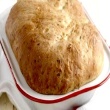
Cover with a lid (not airtight), leave it open a crack for the first 48 hours to prevent a buildup of gases; after that you can usually seal it. Allow the dough to rise at room temperature until it begins to flatten on the top, approximately 2 hours, depending on the room's temperature and the initial water temperature. Do not punch down the dough! With our method, you're trying to retain as much gas in the dough as possible, and punching it down knocks out gas and will make your pizza and flatbreads dense.
AFTER RISING:
Refrigerate and use over the next 14 days; the dough will develop sourdough characteristics over that time. Fully refrigerated wet dough is less sticky and is easier to work with than dough at room temperature. So, the first time you try our method, it's best to refrigerate the dough overnight (or at least 3 hours) before use. Once it's refrigerated, the dough will collapse, and it will never rise again in the bucket - that's normal for our dough.
ON PIZZA DAY:
Prepare and measure toppings in advance: This will help you top the pizza quickly so you can get it into the oven before it sticks to the pizza peel. Thirty minutes before you're ready to bake, preheat a baking stone at your oven's highest temperature, with a baking stone placed in the bottom third of the oven (consider a longer preheat if you're finding the crust results are too soft).
SHAPE IN 20 TO 30 SECONDS:
First, prepare a pizza peel with flour, cornmeal, or parchment paper to prevent your pizza from sticking to it when you slide it into the oven. Sprinkle the surface of your refrigerated dough with flour. Pull up and cut off a 1⁄2-pound (orange-size) piece of dough, using a serrated knife or kitchen shears. Hold the piece of dough in your hands and add a little more flour as needed so it won't stick to your hands. Gently stretch the surface of the dough around to the bottom on all four sides, rotating the dough a quarter-turn as you go to form a ball. Most of the dusting flour will fall off; it's not intended to be incorporated into the dough. The bottom of the ball may appear to be a collection of bunched ends, but it will flatten out and adhere when you roll it into a pizza or flatbread. The entire process should take no longer than 20 to 30 seconds.
ROLL OUT AND STRETCH THE PIZZA CRUST:
Flatten the dough with your hands and a rolling pin on a work surface or directly onto the pizza peel (or shape the disk by hand) to produce a 1⁄8-inch- thick round, dusting with fl our to keep the dough from adhering to your work surface. A little sticking to the surface can be helpful in overcoming the dough's resistance to stretch. Use a dough scraper to unstick the dough as needed, and transfer it to the prepared pizza peel if you haven't already stretched the dough directly on one. (Or bake on a prepared sheet pan). When you're finished, the dough round will be about 12-inches across, and should have enough flour under it to move easily when you shake the peel. As you add toppings, continue to test for sticking by gently shaking the peel. The pizza should move freely. If it doesn't, use the dough scraper
and some flour to free it.
ADD THE TOPPINGS:
Spread the tomato topping over the dough, leaving a 1⁄2-inch border at the edges, then add the cheese and basil (for a different effect, put the basil on after baking). We prefer using well-spaced chunks of cheese, which gradually melt and spread (giving the crust a longer opportunity to crisp before the toppings burn). Drizzle a little olive oil over the pizza if desired.
SLIDE THE PIZZA ONTO THE PREHEATED STONE:
Place the tip of the peel near the back of the stone, close to where you want the far edge of the pizza to land. Give the peel a few quick forward-and-back jiggles and pull it sharply out from under the pizza (if you're using a sheet pan, place it right on the stone). Check for doneness in 8 to 10 minutes, and turn the pizza around in the oven if one side is browning faster than the other. It may take up to 5 minutes more in the oven. Using a spatula may be helpful in getting the baked pizza back onto the peel. Allow to cool slightly, preferably on a wire cooling rack, so that the cheese sets. Buon appetito!
TO STORE OR FREEZE THE DOUGH:
- Store the remaining dough in the refrigerator in your lidded (not airtight) container and use it over the next 14 days: You'll find that even one day's storage improves the flavor, texture, and the color of pizza and flatbread crusts. The dough begins to ferment and take on sourdough characteristics. Cut off and shape more dough as you need it.
- The dough can also be frozen in 1⁄2-pound portions in an airtight container for up to 4 weeks; defrost overnight in the refrigerator prior to baking day. This is a particularly nice option for an egg-enriched dough, which has a 5-day refrigerator life.
Source: Artisan Pizza and Flatbread in Five Minutes a Day by Jeff Hertzberg and Zoe Francois
MASTER RECIPE FOR SUPERFAST PIZZA DOUGH
"A detailed introduction to our simple method for making superfast pizza."
FOR THE DOUGH (makes enough dough for 8 pizzas):
3 1/2 cups lukewarm water (100 degrees F or below)
1 tablespoon granulated yeast
1 to 1 1/2 tablespoon Kosher salt
7 1/2 cups (scoop and sweep) unbleached all- purpose flour
FOR THE PIZZAS:
1/3 cup tomato topping of your choice
3 oz. fresh mozzarella, cut into 1⁄2- inch chunks
6 fresh basil leaves, whole, thinly slivered or torn
Olive oil for drizzling over the pizza before baking
Flour, cornmeal, or parchment paper for the pizza peel
TO MIX THE DOUGH:
Warm the 3 1/2 cups water slightly: It should feel just a little warmer than body temperature, about 100 degrees F. Using warm water will allow the dough to rise to the right point for storage in about 2 hours. You can use cold tap water and get a great final result; but this initial rising will take longer (some testers preferred the flavor of slow-risen dough).
Add yeast and salt to the water in a 5-quart bowl or, preferably, in a lidded (not airtight) plastic food container or foodgrade bucket. Don't worry about getting them to dissolve completely.
Measure the flour with the "scoop-and-sweep" method or weigh the ingredients. Then mix in the flour - kneading is unnecessary: Add all of the flour and mix with a wooden spoon, Danish dough whisk, 14-cup food processor (with dough attachment), or a heavy-duty stand mixer (with paddle). You might need to use wet hands to get the last bit of flour to incorporate if you're not using a machine. Don't knead, it isn't necessary. You're finished when everything is uniformly moistened, without dry patches. This step is done in a matter of minutes, and yields dough that is loose enough to conform to the shape of its container.
ALLOW TO RISE:
Cover with a lid (not airtight), leave it open a crack for the first 48 hours to prevent a buildup of gases; after that you can usually seal it. Allow the dough to rise at room temperature until it begins to flatten on the top, approximately 2 hours, depending on the room's temperature and the initial water temperature. Do not punch down the dough! With our method, you're trying to retain as much gas in the dough as possible, and punching it down knocks out gas and will make your pizza and flatbreads dense.
AFTER RISING:
Refrigerate and use over the next 14 days; the dough will develop sourdough characteristics over that time. Fully refrigerated wet dough is less sticky and is easier to work with than dough at room temperature. So, the first time you try our method, it's best to refrigerate the dough overnight (or at least 3 hours) before use. Once it's refrigerated, the dough will collapse, and it will never rise again in the bucket - that's normal for our dough.
ON PIZZA DAY:
Prepare and measure toppings in advance: This will help you top the pizza quickly so you can get it into the oven before it sticks to the pizza peel. Thirty minutes before you're ready to bake, preheat a baking stone at your oven's highest temperature, with a baking stone placed in the bottom third of the oven (consider a longer preheat if you're finding the crust results are too soft).
SHAPE IN 20 TO 30 SECONDS:
First, prepare a pizza peel with flour, cornmeal, or parchment paper to prevent your pizza from sticking to it when you slide it into the oven. Sprinkle the surface of your refrigerated dough with flour. Pull up and cut off a 1⁄2-pound (orange-size) piece of dough, using a serrated knife or kitchen shears. Hold the piece of dough in your hands and add a little more flour as needed so it won't stick to your hands. Gently stretch the surface of the dough around to the bottom on all four sides, rotating the dough a quarter-turn as you go to form a ball. Most of the dusting flour will fall off; it's not intended to be incorporated into the dough. The bottom of the ball may appear to be a collection of bunched ends, but it will flatten out and adhere when you roll it into a pizza or flatbread. The entire process should take no longer than 20 to 30 seconds.
ROLL OUT AND STRETCH THE PIZZA CRUST:
Flatten the dough with your hands and a rolling pin on a work surface or directly onto the pizza peel (or shape the disk by hand) to produce a 1⁄8-inch- thick round, dusting with fl our to keep the dough from adhering to your work surface. A little sticking to the surface can be helpful in overcoming the dough's resistance to stretch. Use a dough scraper to unstick the dough as needed, and transfer it to the prepared pizza peel if you haven't already stretched the dough directly on one. (Or bake on a prepared sheet pan). When you're finished, the dough round will be about 12-inches across, and should have enough flour under it to move easily when you shake the peel. As you add toppings, continue to test for sticking by gently shaking the peel. The pizza should move freely. If it doesn't, use the dough scraper
and some flour to free it.
ADD THE TOPPINGS:
Spread the tomato topping over the dough, leaving a 1⁄2-inch border at the edges, then add the cheese and basil (for a different effect, put the basil on after baking). We prefer using well-spaced chunks of cheese, which gradually melt and spread (giving the crust a longer opportunity to crisp before the toppings burn). Drizzle a little olive oil over the pizza if desired.
SLIDE THE PIZZA ONTO THE PREHEATED STONE:
Place the tip of the peel near the back of the stone, close to where you want the far edge of the pizza to land. Give the peel a few quick forward-and-back jiggles and pull it sharply out from under the pizza (if you're using a sheet pan, place it right on the stone). Check for doneness in 8 to 10 minutes, and turn the pizza around in the oven if one side is browning faster than the other. It may take up to 5 minutes more in the oven. Using a spatula may be helpful in getting the baked pizza back onto the peel. Allow to cool slightly, preferably on a wire cooling rack, so that the cheese sets. Buon appetito!
TO STORE OR FREEZE THE DOUGH:
- Store the remaining dough in the refrigerator in your lidded (not airtight) container and use it over the next 14 days: You'll find that even one day's storage improves the flavor, texture, and the color of pizza and flatbread crusts. The dough begins to ferment and take on sourdough characteristics. Cut off and shape more dough as you need it.
- The dough can also be frozen in 1⁄2-pound portions in an airtight container for up to 4 weeks; defrost overnight in the refrigerator prior to baking day. This is a particularly nice option for an egg-enriched dough, which has a 5-day refrigerator life.
Source: Artisan Pizza and Flatbread in Five Minutes a Day by Jeff Hertzberg and Zoe Francois
MsgID: 3154550
Shared by: Betsy at Recipelink.com
In reply to: Recipe: 03-01 thru 03-31-12 Recipe Swap - Assort...
Board: Daily Recipe Swap at Recipelink.com
Shared by: Betsy at Recipelink.com
In reply to: Recipe: 03-01 thru 03-31-12 Recipe Swap - Assort...
Board: Daily Recipe Swap at Recipelink.com
- Read Replies (68)
- Post Reply
- Post New
- Save to Recipe Box
ADVERTISEMENT
Random Recipes from:
Pizza/Focaccia
Pizza/Focaccia
- Whole Wheat and Rosemary Focaccia (Bertolli)
- Easy Campfire Pizza and 3 Minute Pizza - Jane, PA - A few tips and recipes
- Chipotle Pizza
- West Coast White Pizza (with goat cheese, ranch dressing, and mozzarella)
- Easy Cheesy-Beef Pizza (using prebaked pizza crust and ground beef)
- Hamburger Pizza (using refrigerated biscuit dough, 1980)
- Vegetable Pizzas (Variations - Chicken, Mexican or Pesto, using skillet pizza crusts)
- Chef Boyardee Pizza Sauce - pepperoni oil
- Stuffed Crust Pizza
- Tomato and Cheese-Filled Focaccia
UPLOAD AN IMAGE
Allowed file types: .gif .png .jpg .jpeg
Allowed file types: .gif .png .jpg .jpeg
POST A REPLY
Post a Request - Answer a Question
Share a Recipe
Thank You To All Who Contribute
Post a Request - Answer a Question
Share a Recipe
Thank You To All Who Contribute
- Do not use the message boards for advertising or solicitation of our visitors.
- Do not post personal data about yourself or others such as resumes, phone numbers, addresses, etc.
- Be kind. Rude or offensive posts are not acceptable. If you should find a posting that is objectionable to you please do not post a response. E-mail a message to: help@recipelink.com If a complaint is made against a message it is removed.
- Choose the board topic that best suits your post. Off topic messages may be moved or removed. Posts of the same request to more than one message board will be deleted.
- Please do not request that responses be e-mailed directly to you - we work together as a group and we all want to enjoy the replies!
- Please keep posting of URLs to a minimum and limited to exact responses to requests. Posts with links included are removed if they are inaccurate, if they don't lead to the exact answer to the request or if the site content doesn't meet our criteria for sites we link to.
- E-mail all site-related questions and comments to:help@recipelink.com
-
 The message
boards are monitored and not all posts are accepted. We reserve the right to
modify, move, use or remove (or not remove) information posted at our discretion
and without prior notification or explanation. Failure to follow the guidelines
may result in loss of access. These guidelines are subject to change without
notice.
The message
boards are monitored and not all posts are accepted. We reserve the right to
modify, move, use or remove (or not remove) information posted at our discretion
and without prior notification or explanation. Failure to follow the guidelines
may result in loss of access. These guidelines are subject to change without
notice.
 Not required, but a request:
Please take a moment to post a thank you to those that take the time (sometimes hours) to find the recipe or information you requested!
Not required, but a request:
Please take a moment to post a thank you to those that take the time (sometimes hours) to find the recipe or information you requested!
Thank you for participating!
POST A NEW MESSAGE
Post a Request - Answer a Question
Share a Recipe
Thank You To All Who Contribute
Post a Request - Answer a Question
Share a Recipe
Thank You To All Who Contribute
- Do not use the message boards for advertising or solicitation of our visitors.
- Do not post personal data about yourself or others such as resumes, phone numbers, addresses, etc.
- Be kind. Rude or offensive posts are not acceptable. If you should find a posting that is objectionable to you please do not post a response. E-mail a message to: help@recipelink.com If a complaint is made against a message it is removed.
- Choose the board topic that best suits your post. Off topic messages may be moved or removed. Posts of the same request to more than one message board will be deleted.
- Please do not request that responses be e-mailed directly to you - we work together as a group and we all want to enjoy the replies!
- Please keep posting of URLs to a minimum and limited to exact responses to requests. Posts with links included are removed if they are inaccurate, if they don't lead to the exact answer to the request or if the site content doesn't meet our criteria for sites we link to.
- E-mail all site-related questions and comments to:help@recipelink.com
-
The message
boards are monitored and not all posts are accepted. We reserve the right to
modify, move, use or remove (or not remove) information posted at our discretion
and without prior notification or explanation. Failure to follow the guidelines
may result in loss of access. These guidelines are subject to change without
notice.
Not required, but a request:
Please take a moment to post a thank you to those that take the time (sometimes hours) to find the recipe or information you requested!
Thank you for participating!